
CMS Offers Optional Hold Harmless Period for Medicaid Work and Community Engagement Requirements
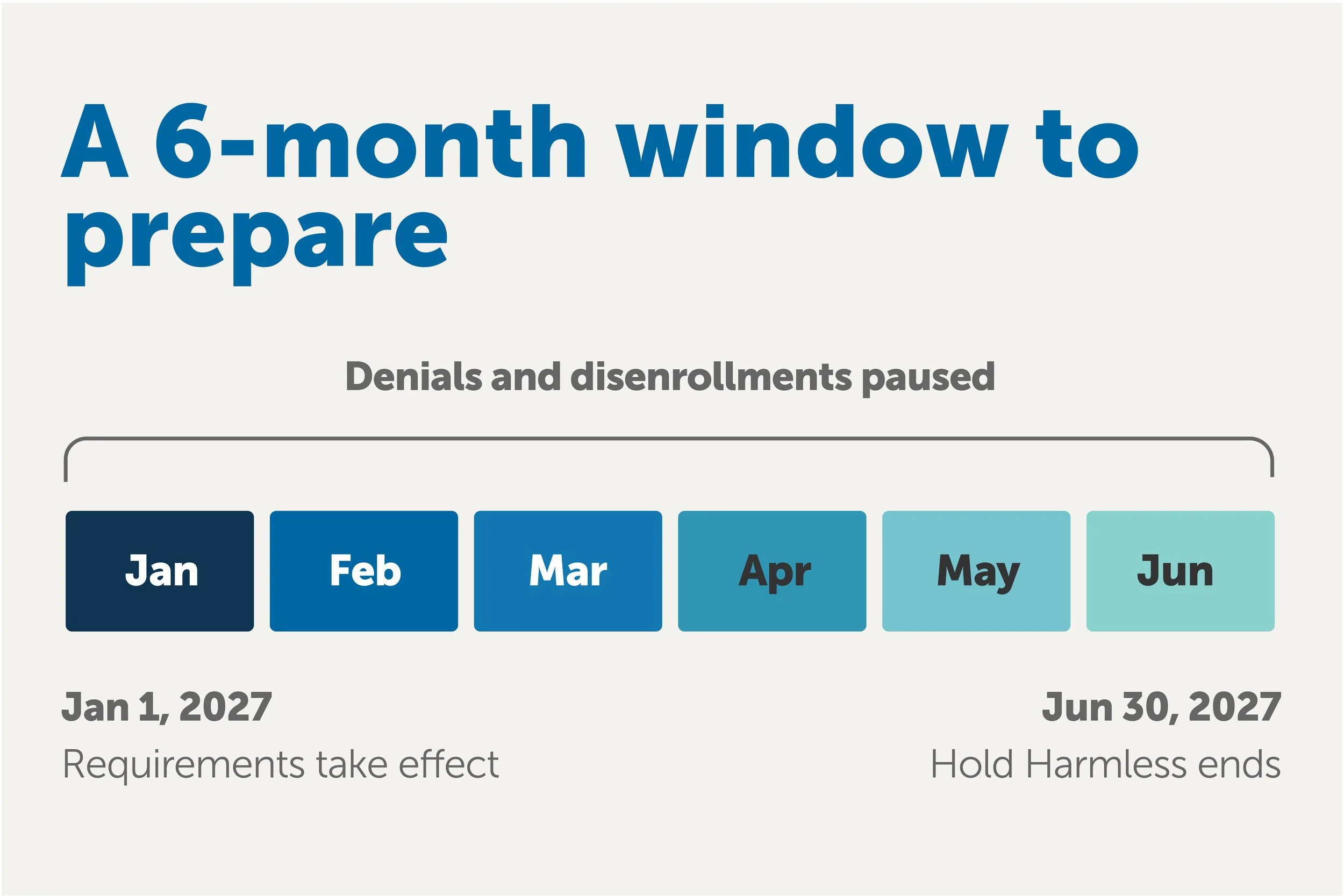
On November 13, 2026, the Centers for Medicare & Medicaid Services (CMS) issued guidance offering states an optional hold harmless period for Medicaid work and community engagement (CE) requirements under H.R. 1. States that receive CMS approval may suspend CE-related eligibility denials and disenrollments for applications received and renewals initiated through June 30, 2027.
The guidance gives states additional time to refine their systems and processes before terminating coverage for anyone who is otherwise noncompliant. It does not, however, extend the January 1, 2027, implementation deadline. States using the option must still assess whether individuals meet the requirement or qualify for an exclusion.
What Does the Hold Harmless Period Cover?
CMS will not take enforcement action against participating states for suspending denials and disenrollments when individuals have not demonstrated that they meet CE requirements through qualifying activities or deemed compliance, or that they qualify for an exclusion. The protection applies based on when an application is received or a renewal is initiated. States may use the option through June 30, 2027, or choose a shorter period.
CMS also clarifies that eligibility determinations covered by an approved hold harmless period will not be counted as errors in Payment Error Rate Measurement (PERM), Medicaid Eligibility Quality Control (MEQC), or other CMS Medicaid beneficiary eligibility audits solely because an individual did not demonstrate CE compliance.
What Must States Continue to Do?
Eligibility requirements that predate work and community engagement requirements continue to apply. For example, the option does not allow states to suspend denials or disenrollments when an individual is ineligible based on household income or age.
States using the hold harmless period must assess CE compliance, deemed compliance, and exclusions for all relevant applications and renewals. They must also continue working toward full compliance with the statute and applicable regulations.
For applications submitted and renewals initiated after a state’s hold harmless period ends, the state must apply CE-related denials and terminations when appropriate, following all applicable requirements, including required noncompliance procedures.
What Opportunities Does This Enforcement Delay Present for States?
This delay creates an opportunity for states to evaluate how CE processes work in practice while otherwise eligible individuals retain coverage. States can use the period to identify problems with data matching, eligibility determination logic, notices, and staff procedures before those problems result in CE-related coverage losses.
States’ experience with the COVID-19 public health emergency and subsequent Medicaid unwinding offers practical lessons for CE hold harmless implementation. States developed approaches worth building on by using strategies to streamline verification, update contact information, and help individuals complete renewals. CMS found that these approaches reduced administrative burdens and helped protect eligible individuals from disenrollment.
The CE hold harmless period gives states an opportunity to apply these lessons before CE-related denials and disenrollments begin. States should use this period to:
Test individual outcomes: Review cases from initial screening through the eligibility decision to confirm that qualifying activities, deemed compliance, and exclusions are identified correctly.
Reduce unnecessary paperwork: Evaluate whether available data are being used effectively before requesting information from applicants and members.
Check whether communications work: Confirm that individuals understand notices, can submit information through available channels, and can obtain timely assistance.
Act on early results: Monitor unresolved assessments, documentation requests, processing times, and member questions to identify problems and verify that corrections work.
Address gaps in compliance activities: Use the period to understand why people are not meeting CE requirements and provide targeted assistance by working with partners and entities that can support compliance with qualifying activities and address gaps prior to the end of the hold harmless period.
The transition out of the hold harmless period also requires planning. States should establish clear milestones for resolving defects, training staff, and communicating changes before CE-related coverage consequences begin.
What Should States Do Now?
States should assess whether to request the option and identify how they would use the transition period to strengthen implementation:
CMS-mandated mitigation plans: Document compliance deficiencies, proposed mitigations, and the requested hold harmless period. Identify owners, milestones, and dependencies for resolving outstanding issues.
Eligibility systems and workflows: Confirm that systems continue to assess CE while suspending CE-related denials and disenrollments for covered applications and renewals. Test that other eligibility requirements are applied correctly.
Verification processes: Review how available data identify qualifying activities, deemed compliance, and exclusions. Identify where missing or conflicting information creates unnecessary requests for documentation.
Staff and partner guidance: Train eligibility workers, call centers, managed care plans, providers, and enrollment assistors on what the hold harmless period changes and what individuals still need to do.
Member communications: Revise notices and public-facing materials so individuals understand the process, available assistance, and when CE-related coverage provisions will impact coverage.
Prepare for the end of the hold harmless period: Establish a process to review assessment results, resolve operational problems, and prepare for the end of the hold harmless period.
Coordinating policy, systems, operations, and communications will help states use the additional time effectively and reduce avoidable coverage disruptions.
Aurrera Health supports states and their partners with H.R. 1 policy analysis, operational planning, and implementation. To discuss tailored support, contact Lauren Block at lauren@aurrerahealth.com.
Author
