
Navigating Medicaid Budget Pressures? Our HCBS Preservation Framework Is Now Open Access
As states continue to navigate Medicaid budget pressures in 2026, the policy questions surrounding home and community-based services (HCBS) have only grown more urgent.
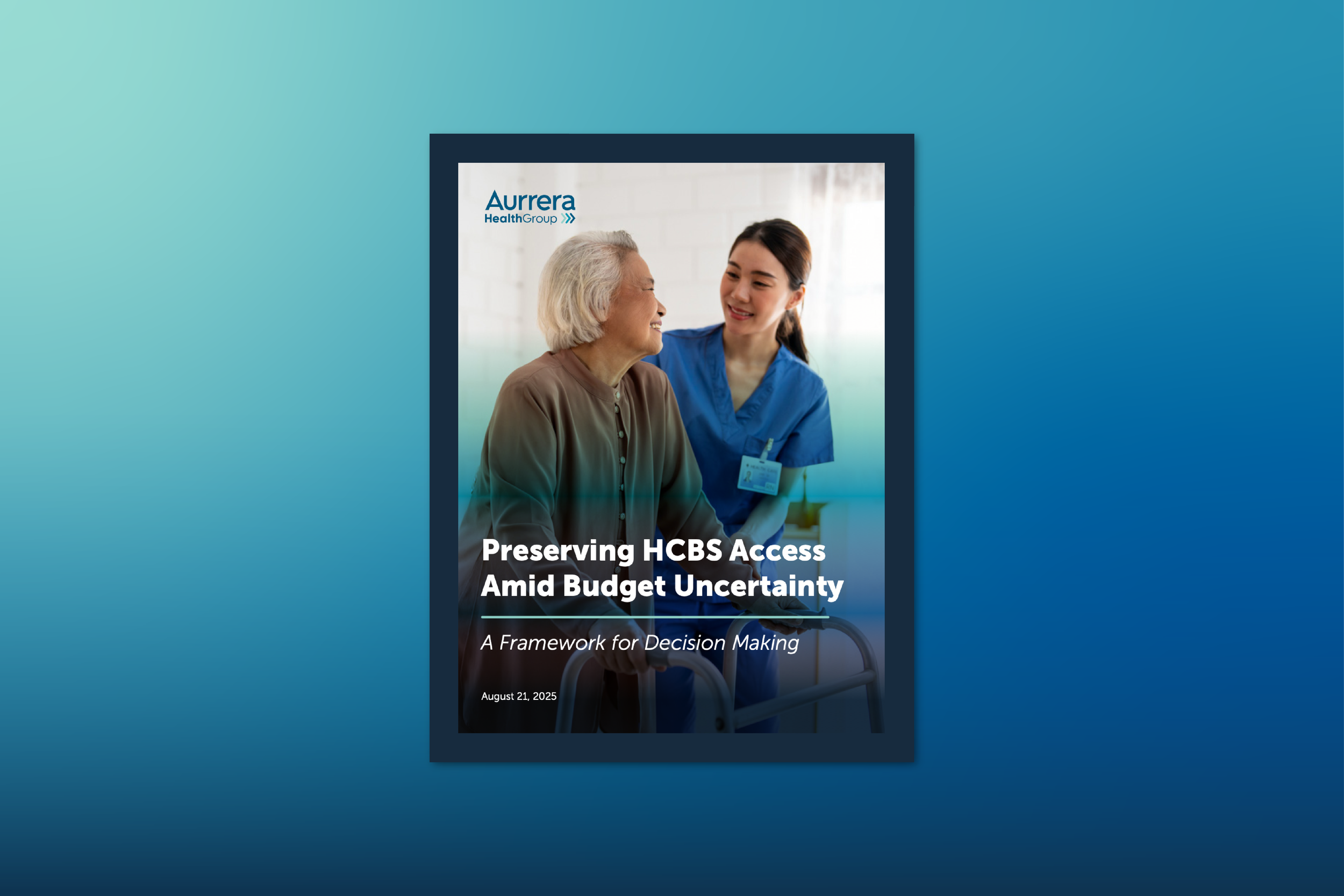
Preserving HCBS Access Amid Budget Uncertainty: A Framework for Decision Making was developed to help state policymakers respond strategically to potential Medicaid spending reductions under the One Big Beautiful Bill Act (OBBBA).
The stakes are high. Medicaid covers approximately 9.1 million Americans who rely on long-term services and supports (LTSS), and HCBS account for nearly 70% of Medicaid LTSS spending. Because HCBS are optional under federal law, they are particularly vulnerable during fiscal downturns. Past funding shortfalls have resulted in reduced services and growing waiting lists and researchers estimate future cuts could push millions of older adults toward institutional care.
This framework is designed to help states avoid reactive decision-making and instead take a structured, data-informed approach.
A Clear, Practical Framework
The framework walks states through a three-step decision-making framework:
Assess and Engage – Use claims data, National Core Indicator surveys, and past evaluations to understand how HCBS programs are performing, and engage stakeholders early and often.
Set Your Compass – Identify decision-making criteria, including potential savings targets, administrative feasibility, and unintended consequences.
Weigh Your Options – Review concrete policy strategies and understand their fiscal impact, administrative complexity, and potential effects on members and providers. Rather than prescribing a single solution, the framework equips policymakers with tools to evaluate tradeoffs.
Menu of Actionable Strategies
The guide outlines practical options states can consider, including:
Redesigning waivers or revising eligibility criteria
Implementing tiered benefit structures
Modifying waiting list policies
Leveraging managed long-term services and supports (MLTSS) tools such as care transition incentives and medical loss ratio safeguards
Using In Lieu of Services (ILOS) to address health-related social needs
Investing in rebalancing efforts, including “No Wrong Door” enrollment approaches
Strengthening self-directed programs and family caregiver supports, including respite and tax credit options
Each strategy is presented alongside considerations about savings potential and administrative complexity, helping leaders understand not just what they could do, but what it might require.
Preserving Access While Managing Costs
Importantly, the framework recognizes that protecting HCBS can also support long-term fiscal sustainability. By maintaining access to community-based care, states can reduce the risk of higher-cost institutional services and help families avoid financial strain.
Download the Framework
Download Preserving HCBS Access Amid Budget Uncertainty and explore practical, balanced strategies to safeguard HCBS programs during a time of fiscal constraint.
For states seeking tailored support in policy development, stakeholder engagement, or implementation strategy, Aurrera Health is here to help. Please reach out to Kristal Vardaman to learn more.
Authors
![Brendan Finn [Senior Policy Consultant]](https://images.squarespace-cdn.com/content/v1/66902b12f1fed363b0b53399/1749578371186-7EW6P6VEMIF83ZQVC5X8/Brendan+Finn.jpg)
![Kristal Vardaman [Managing Principal]](https://images.squarespace-cdn.com/content/v1/66902b12f1fed363b0b53399/1749580093593-C8BI0BAWRM66131D3K5Z/Kristal+Vardaman.jpg)