
No Wrong Door: Cross-Agency Coordination for Medicaid and SNAP Work Requirements to Help Participants Maintain Benefits
Federally mandated work and community engagement requirements established under H.R. 1 require a significant level of effort for states to implement. At the same time, the new requirements present a unique opportunity for states and communities to establish unprecedented levels of cross-sector partnerships to help Medicaid and SNAP participants simultaneously maintain benefits and compliance while achieving economic mobility. By coordinating across health, social services, workforce, education, and volunteer programs, states can make it easier for people to access support that addresses barriers to entering the workforce or sustaining employment.
A significant percentage of Medicaid and SNAP participants are already doing what they need to maintain benefits. Kaiser Family Foundation’s analysis of 2023 data found that 64% of Medicaid adults ages 19–64 subject to requirements worked full or part time. Another 28% were not working because of caregiving responsibilities, illness or disability, or school attendance. Many of the remaining people who aren’t currently meeting requirements include some of the populations with the greatest needs: homeless individuals, people who don’t speak English, people with low digital literacy, and individuals who have health conditions that make it difficult to sustain engagement in activities. These individuals will likely require significant support and engagement to comply with the new requirement.
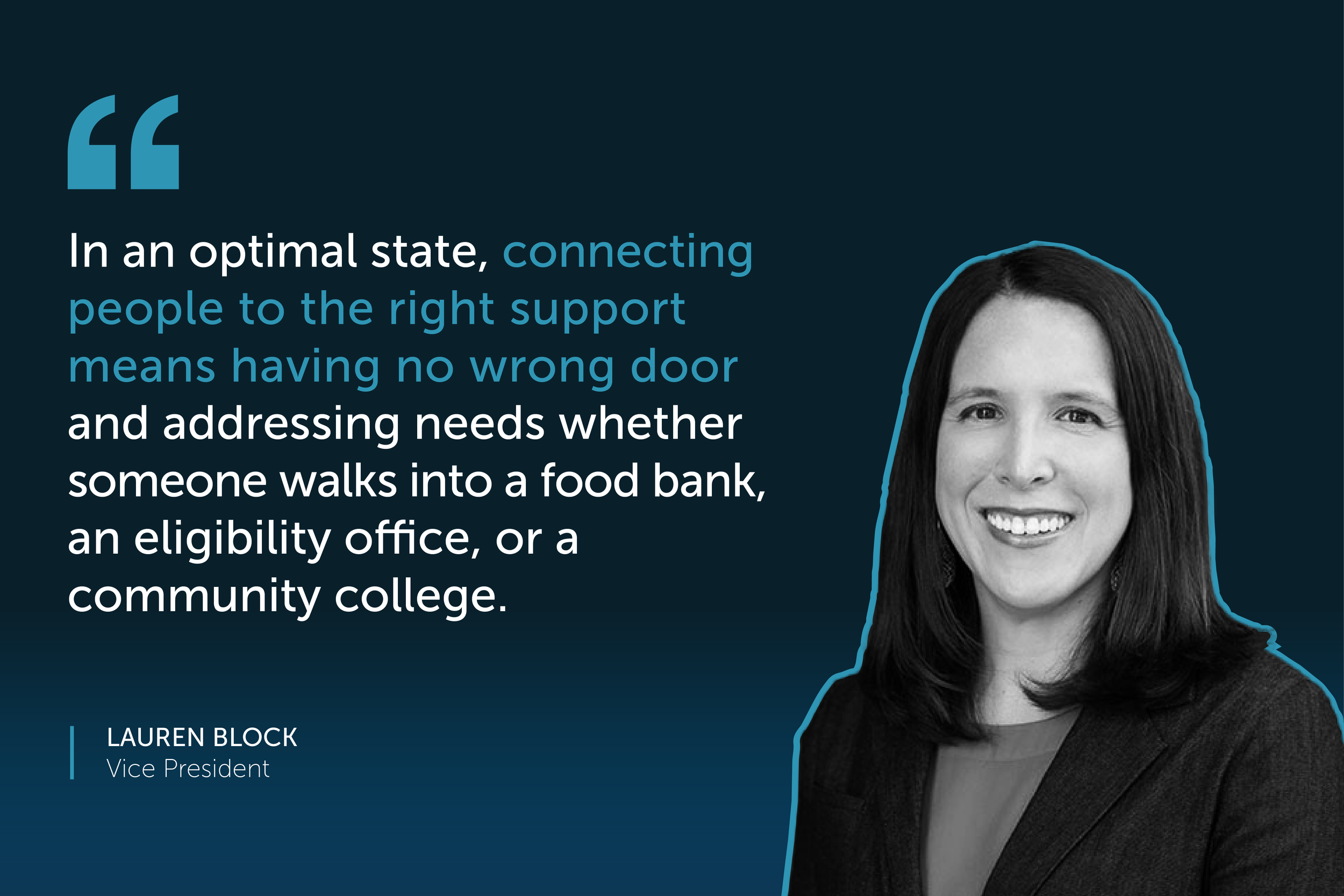
The approach starts from a simple premise. When someone needs to meet a work or community engagement requirement, they will likely need help to find work, training, education, or volunteer roles that improve their lives. In an optimal state, connecting people to the right support means having no wrong door and addressing needs whether someone walks into a food bank, an eligibility office, or a community college.
This is only possible with coordination that crosses agency lines at the state and local levels. In most states, Medicaid eligibility and enrollment sit with the state Medicaid agency. SNAP and county human services connect through a separate social services department. Workforce programs, job training, and labor market data run through the state workforce agency and local workforce boards. Community colleges and adult learning programs operate under their own governing systems. These systems have historically operated separately, with their own data, rules, and points of contact. The community engagement requirements give states a reason to bring them to the same table.
Aurrera Health Group provides technical assistance to support this kind of cross-agency work, including state agency coordination to support compliance and economic mobility, workforce boards, community colleges, managed care plans, and community-based organizations. We provide hands-on technical assistance, support with stakeholder engagement, policy implementation assistance, and strategic communications support.
States have a chance to define what good implementation looks like. The work is time-consuming and challenging, but early time investment at the state and local levels will shape whether community engagement requirements become a barrier to accessing benefits or a bridge to economic stability.
Looking for more information or support?
To learn more about this work, or to explore how a similar approach could work in your state or county, contact Lauren Block at lauren@aurrerahealth.com.
Author
