
Strengthening Medi-Cal Through Managed Care Incentives
California’s Medicaid program, known as Medi-Cal, serves nearly one in three state residents and is continuously evolving through major reforms aimed at improving access and quality for all Medi-Cal members. As part of this work, the California Department of Health Care Services (DHCS) has expanded its use of financial incentives within managed care to drive systemwide improvement.
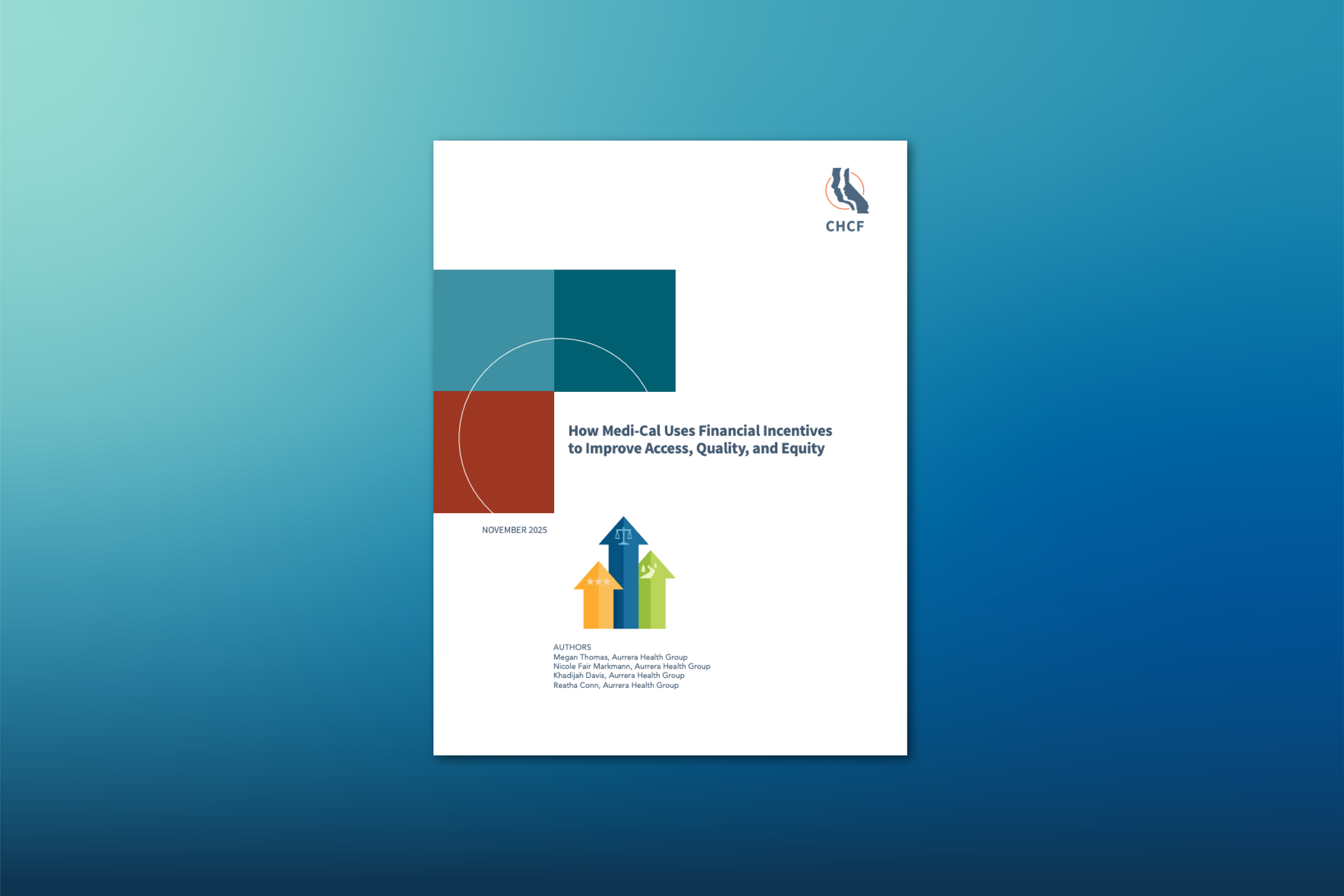
The California Health Care Foundation (CHCF) partnered with Aurrera Health Group to develop How Medi-Cal Uses Financial Incentives to Improve Access, Quality, and Equity. To inform this publication, Aurrera Health Group conducted interviews with Medi-Cal health plans, DHCS leaders, provider organizations, consumer advocates, and other state Medicaid agencies to understand what is working well and where opportunities exist to strengthen DHCS’ overall incentive framework.
Earlier this year, we also had the opportunity to share our research findings at the Medicaid Health Plans of America (MHPA) annual conference. There, we engaged with Medicaid health plan leaders from across the country and discussed how incentive programs are shaping their quality improvement efforts. These conversations closely reflected the themes surfaced in our research and highlighted interest in California’s approach.
The Role of Incentives in Medi-Cal
Over the past five years, DHCS has launched or refined eight incentive programs that touch on key areas such as preventive care, behavioral health access, housing-related supports, and member experience. Collectively, these programs put billions of dollars at stake and represent a significant lever for Medi-Cal transformation.
What We Learned: Key Themes for Effective Incentive Design
While each program is unique, several clear themes emerged from our research and stakeholder interviews. Key takeaways include:
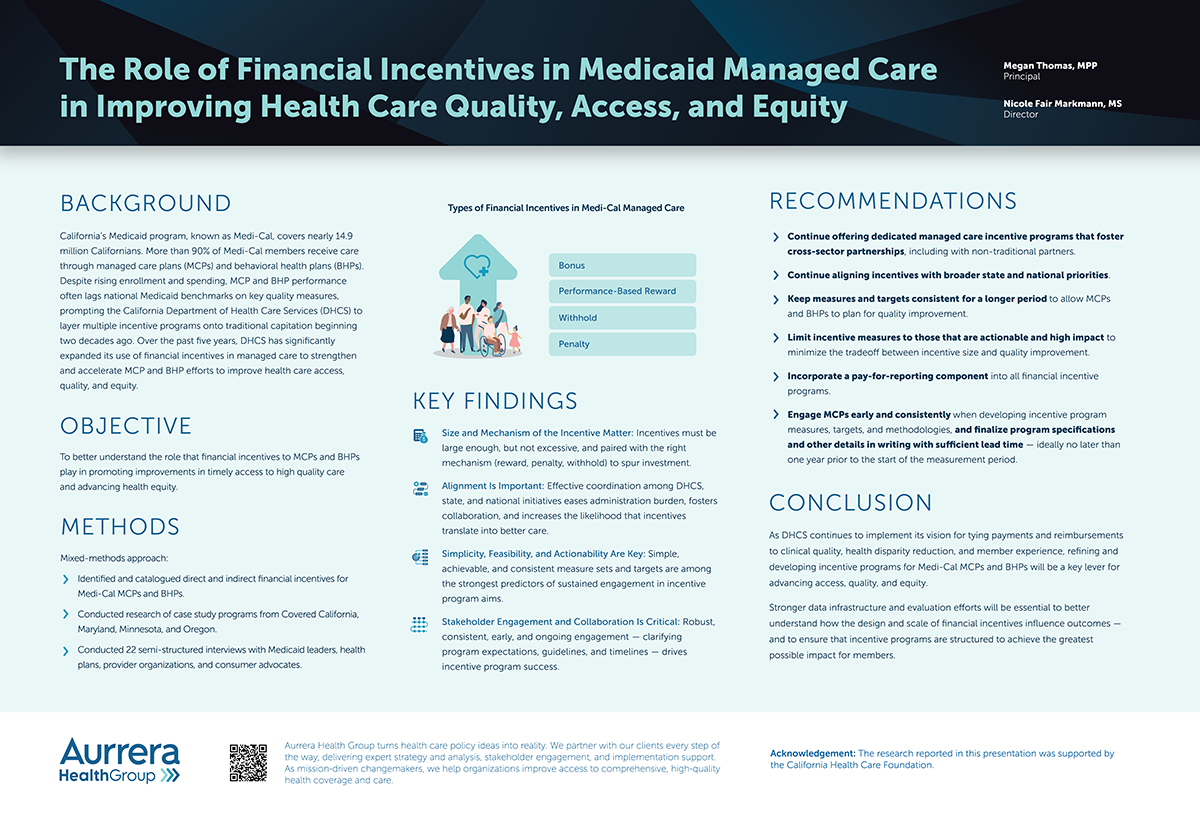
Incentives must be meaningful to influence behavior. Smaller bonus amounts or sanctions often do not justify the operational investments needed for improvement. Predictable, prospective withholds were identified as more effective motivators.
Alignment across programs strengthens impact. Coordinating measures and expectations across DHCS programs and broader initiatives, like California Advancing and Innovating Medi-Cal (CalAIM), helps focus health plan quality improvement efforts and reduces administrative burden.
Simplicity and feasibility matter. Stakeholders emphasized the importance of clear, stable, and actionable measures. Phased approaches, such as pay-for-reporting, are especially helpful when introducing new measures.
Early, transparent engagement improves implementation.Programs developed with timely communication and meaningful stakeholder input are viewed as more effective and easier to execute.
How California Compares Nationally
Across the country, Medicaid agencies are refining their incentive programs with an increasing emphasis on population health, whole-person care, and accountability. As discussed in the report, states like Minnesota and Oregon have demonstrated how larger at-risk amounts and strategically aligned measure sets can drive improvement over time.
California is also leading with innovative investments — including the Housing and Homelessness Incentive Program, Incentive Payment Program, and Student Behavioral Health Incentive Program. These initiatives have strengthened cross-sector partnerships and supported infrastructure that addresses social drivers of health.
Looking Ahead
DHCS’ evolving value-based payment strategy reinforces the important role incentives can play in improving access, quality, and outcomes for all Medi-Cal members. As these programs continue to mature, opportunities remain to streamline measures, strengthen alignment, and ensure incentives are both meaningful and feasible.
Across the country, Medicaid agencies and health plans are navigating similar questions. At Aurrera Health Group, we help clients interpret evolving requirements, design effective incentive structures, and translate policy goals into operational strategies that work for plans, providers, and members. For more information about how we can help you, please contact Megan Thomas.
Authors
![Nicole Markmann [Director]](https://images.squarespace-cdn.com/content/v1/66902b12f1fed363b0b53399/1749581764597-0KQUI52BFDZA22EMUAOL/Nicole+Markmann.jpg)
![Megan Thomas [Managing Principal]](https://images.squarespace-cdn.com/content/v1/66902b12f1fed363b0b53399/1749580524089-7SL9PV02D9L9QOR9TVTG/Megan+Thomas.jpg)