
CMS Innovation in Behavioral Health (IBH) Cohort II: What State Medicaid Agencies Need to Know
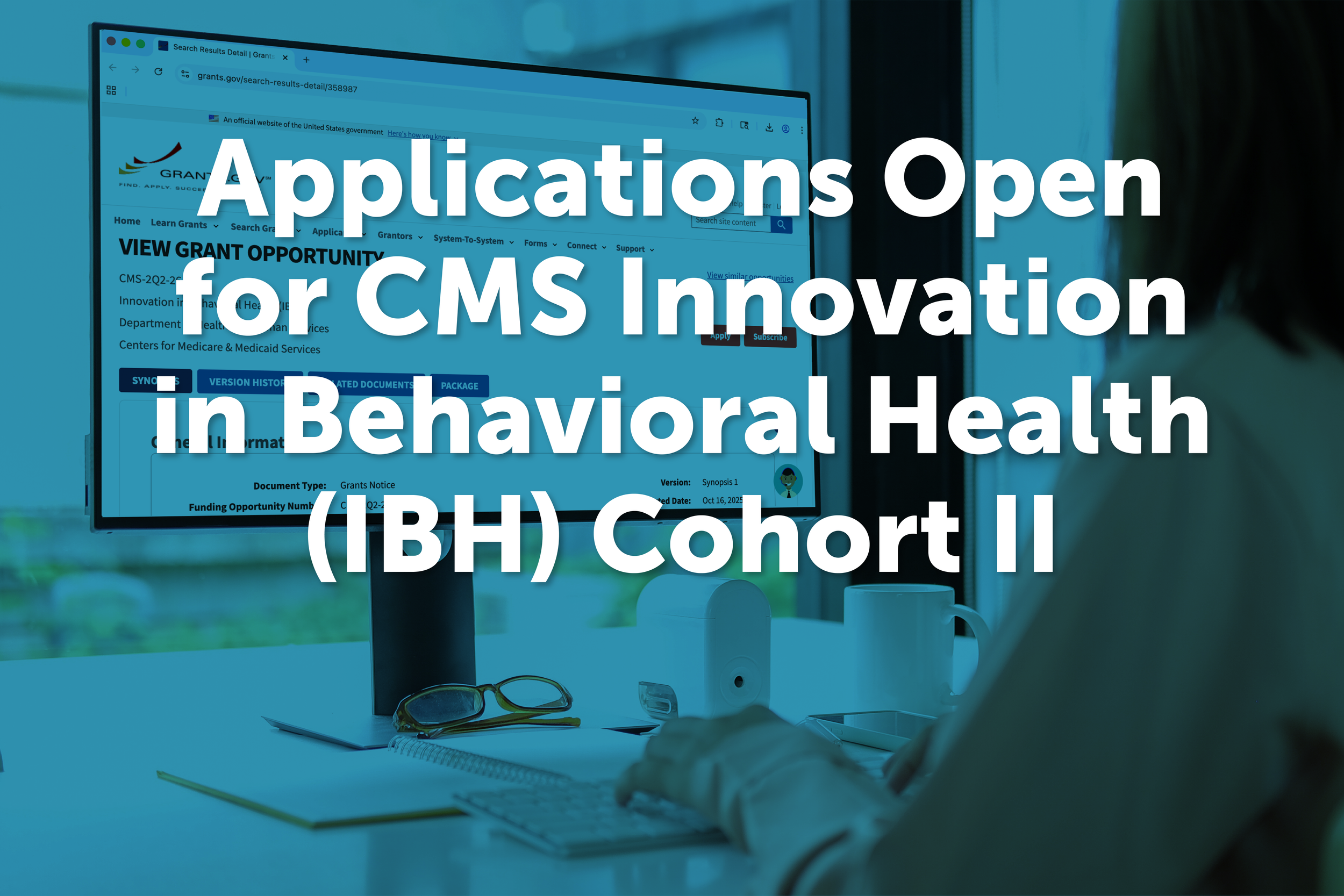
The Centers for Medicare & Medicaid Services (CMS) has opened a second round of applications for the Innovation in Behavioral Health (IBH) Model giving states a renewed opportunity to transform how behavioral health, physical health, and social needs are integrated into care delivery.
Through IBH Cohort II, up to five state Medicaid agencies will receive cooperative agreements to test innovative strategies that bridge behavioral and physical health care for Medicaid, Medicare, and dually eligible adults with moderate to severe behavioral health conditions. Each state will receive up to $7.5 million over seven years (2027 – 2033) to strengthen care coordination, expand health IT capacity, and test value-based payment models aligned across Medicaid and Medicare. States will also receive technical assistance and participate in a national learning collaborative focused on planning, workforce development, and value-based care.
Why States Should Apply
Access Significant Federal Funding Without a State Match: States can access federal dollars to build infrastructure, enhance health IT, and pilot new VBP models at no additional fiscal burden.
Catalyze Multi-Payer Integration and Payment Reform: By aligning Medicaid and Medicare under one model, IBH allows states to lead in multi-payer integration, reduce provider burden, and strengthen sustainability through shared accountability and incentives.
Address Social Needs: The model requires screening for health-related social needs to ensure care plans are person-centered and comprehensive, addressing the full range of factors that influence health outcomes.
Build Sustainable, Data-Driven Systems: Investments in data sharing, reporting, and evaluation infrastructure will strengthen long-term capacity and support future value-based and integrated care models.
Key Dates and Requirements for State Medicaid Agencies
To apply for IBH Cohort II, states may submit an optional Letter of Intent by April 1, 2026, and must submit a full application by June 3, 2026. CMS anticipates announcing awards by September 15, 2026.
As part of the application, states must submit a detailed Project Narrative demonstrating operational readiness, stakeholder coordination, and a clear plan for integrated behavioral health and physical health care.
Key Components for the Application Narrative
Model Scope and Population: Define the service area (statewide or regional) and Medicaid population to be served, including prevalence of behavioral health conditions and co-occurring physical health needs.
Organizational Capacity: Outline the state Medicaid agency’s structure, key personnel, and partnerships that will manage and implement the model.
Model Intervention: Explain how the state intends to develop its IBH care delivery framework in alignment with model requirements, including stakeholder engagement and implementation processes.
Medicaid Payment Approach: Describe the proposed Medicaid payment design and how it aligns with CMS’ Medicare payment approach, including performance-based incentives and risk-sharing mechanisms.
Provider Recruitment Plan: Identify how the state will recruit and support eligible behavioral health practices, including rural, safety-net, and tribal providers.
Health IT and Data Plan: Detail current data systems, plans to achieve interoperability, and how the state will meet CMS’ reporting and privacy requirements.
Sustainability Plan: Present strategies for sustaining the model after federal funding ends.
Budget Impact Analysis: Provide information on how the state anticipates the IBH Model will affect health outcomes and Medicaid spending.
These elements collectively demonstrate a state’s readiness to operationalize a large-scale, multi-payer integration initiative within a short pre-implementation timeline.
How Aurrera Health Group Can Help
Developing the IBH Cohort II Project Narrative will require coordination across state agencies and a clear understanding of CMS expectations. Aurrera Health Group has extensive experience helping states translate technical requirements into clear, actionable plans. Our team has robust experience supporting Medicaid agencies with federal grant and model applications, including Section 1115 demonstrations, State Opioid Response programs, and CMS Innovation Center initiatives.
We can help states submit a comprehensive, compliant, and competitive application. If you are interested in receiving support for your IBH Cohort II application, please contact Kelly Murphy.
Authors
![Nicole Markmann [Director]](https://images.squarespace-cdn.com/content/v1/66902b12f1fed363b0b53399/1749581764597-0KQUI52BFDZA22EMUAOL/Nicole+Markmann.jpg)
![Anisha Argawal [Deputy Director]](https://images.squarespace-cdn.com/content/v1/66902b12f1fed363b0b53399/1749568490774-KHEMJJHZ9QUMV3FPQ01R/Anisha+Agrawal.jpg)
![Kelly Murphy [Managing Principal]](https://images.squarespace-cdn.com/content/v1/66902b12f1fed363b0b53399/1749579952370-VNEYYL58PJHZTM0SMFQR/Kelly+Murphy.jpg)